Flotsom

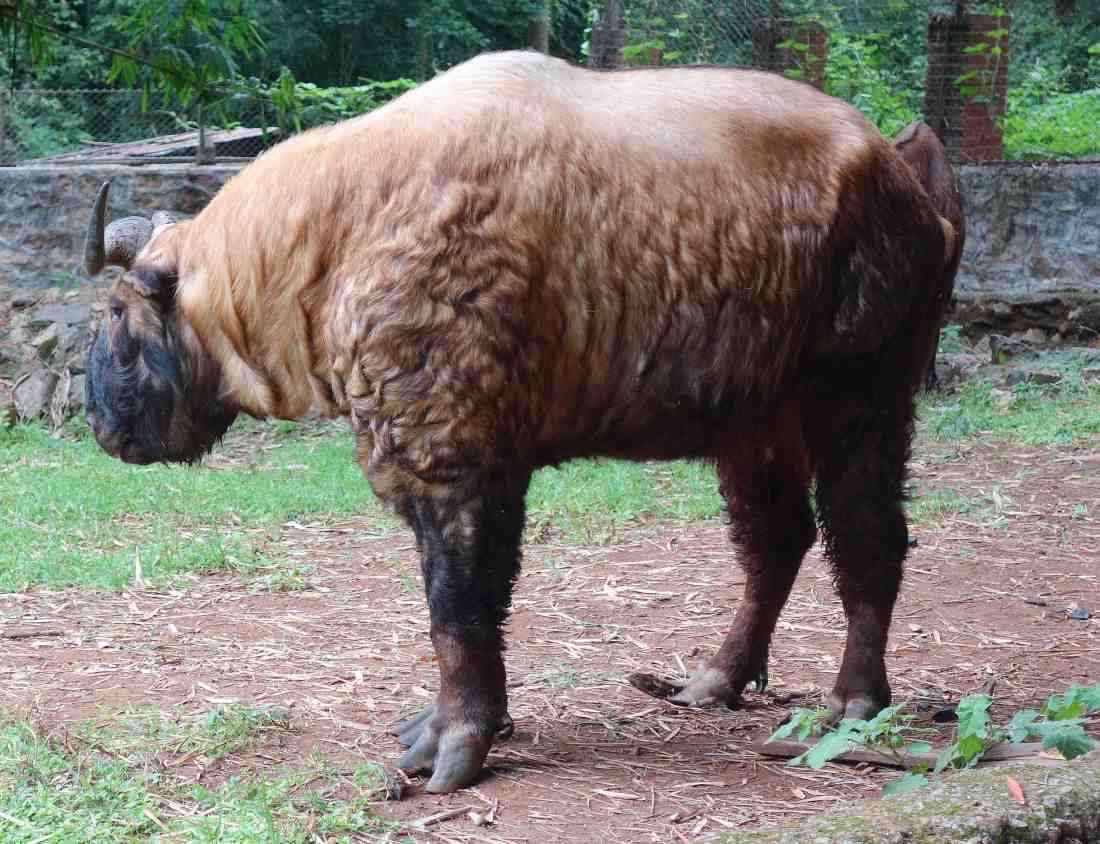
[Above photo: A takin or gnu goat, a large ungulate found in the Eastern Himalayas, looking depressed in the National Kandawgyi Botanical Gardens.]

1 September 2019

I vowed to myself not to mention the wetness-that-falls-from-the-sky in this post.  I also do not want to call attention to the personal meaning of today’s date. Nor to the Wrecking Ball in the White House. Irony, ha!

This was a week like many others, and yet, of course, entirely different. There was no drama and I discovered no new niches in Yangon.

I am amazed at how often, even with very intellectually-disabled or autistic or depressed or simply (whatever that means) behaviorally dysregulated children, things can improve very rapidly. It seems to me much more frequently here than in the US. I don’t think all the parents are just eager to please us and distort their experience in reporting at a follow-up appointment a week or two after their last clinic visit.  Perhaps I’m mistaken, but I have a feeling that there is something culturally, even in what would seem to be a very dysfunctional family, that tends toward health in Myanmar. Magical, wishful thinking, I guess, on my part. But the turnarounds are striking. Perhaps it’s that people are so used to being crushed and thwarted here that they recognize tiny flickers of light in their darkness, whereas in the US we expect miracles, instant stadium floodlights. Or are they just very compliant with our suggestions?

I have wanted to discuss several matters with Professor Tin Oo, my Chief of Psychiatry. He’s a very busy man, running the Department, seeing patients at the massive Yangon Mental Hospital and in the clinic at Yangon General Hospital, travelling to various states to teach, meeting with the country leadership in Naypyitaw, and maintaining his private practice in Mandalay where he returns each weekend. I caught up with him at the airport, on the fly so to speak, on Friday, 2 hours before he took the puddle jumper from here to there. The airport, on a bad traffic day, is a 1 ½-2 hour taxi ride from downtown, and costs 10,000-12,000kyat ($6.50-$8).

BTW, almost all the taxis in Yangon are Toyota Proboxes or Passos. Toyota has a lock on the market here, as in Malawi. A rare Suzuki or Nissan. The luxury cars tend to be Toyota Crowns, similar to Lexus. No Camaros, Mustangs, Malibus. Being of my age and gender, this interest, however shallow, is hard-wired. Probably best explained by epigenetics. Now there’s a field for a bright young person…

I’ve seen an “Airport” bus moving up Pyay Road from time to time and thought I’d try it. 500kyat (33 cents) in a comfortable, new, air-con vehicle.  I discovered online that the starting point for this airport odyssey was the main Yangon Railroad Station. So I hiked there to find masses of buses parked. I boarded a likely one, whereupon the driver pointed excitedly at an “Airport” bus driving by us. He motioned me around the corner. I quickly decamped and trotted after the moving bus.  In two blocks I found it stopped in the middle of the street at no official location. The ride took 50 minutes only, depositing me directly in front of the domestic terminal.

Arriving an hour early for our meeting, I found a restaurant and had a non-memorable lunch, reading further in John and Julie Gottman’s book about failing marriages. Boy, we had the 4 Horsemen of the Apocalypse in spades in ours.  Not Conquest, War, Famine and Death from the New Testament but as defined by the Gottmans: Criticism, Contempt, Defensiveness, and Stonewalling.  And Withdrawal. The book, based on (especially) his research over the years, is a great read, especially to assess one’s own capacity for a successful relationship. The students want me to teach them about Couples Therapy, so I’m teaching myself first. I’ve done some in my practice but it was more informed by my training in Family Therapy and Psychoanalysis than anything specific to a dyad. My friend Hans enthusiastically teaches a different variety, travelling from Berkeley to Seattle and LA to carry the message. Like a preacher in the Old West, except on a 737 instead of a pony.

At the appointed hour, Professor Tin Oo and his protégé, Dr. Kyi Min Tun who is also one of my students, arrived and we had tea and talked. There is a really exciting ferment here—-a new National Mental Health Act is being finalized, there is energy to address the lack of Child and Adolescent MH services, Child Protection is being examined and expanded, and more. A big part of me thinks it is an opportunity I should seize; I can possibly have a significant effect on the direction of its momentum.  I also have done most of the heavy lifting, having assembled the curriculum and all of the teaching materials for the Child and Adolescent Psychiatry training.

The alternative, in a work-sense, is to be at home in Maine and to focus on the genuine pleasures of domesticity, establishing a lovely home on the water and making friends. I fear I’ll not feel as vital, as alive, as I do here.  My purpose there seems like it would be very small and self-contained whereas here it is of a larger scope. If I were assured of good health and vigor and keeping my marbles….   But, then, we never are really assured of that. Witness the late-April 2008 shock of my lung cancer: “The size of a Valencia orange, wrapped around your right subclavian vein.” my surgeon said after its removal.

I long for the serene and familiar beauty of Maine. But, somehow, it feels like a resignation to old age to turn down this opportunity. If I stay here, it would have to be with a three month holiday next summer to visit family and friends in the US and to watch the sun rise and set on Penobscot Bay from the porch of my cabin, with a cup of 44 North “Sumatra” in my hand.

I suppose it boils down to the definite pleasures of self-indulgence, home, and family versus the excitement of novelty and good works or the meditative absorption of building a rowing skiff in my workshed and watching my garden grow contrasting with watching my students grow and spread a gospel in which I believe: “Thou shalt listen and attempt to understand the children (and their parents).”

Complicating all this is that I have met some very lively people here who are doing exciting things. A new Fulbright scholar is spending a night in my spare bedroom, respite from her hotel; she’ll be working on national environmental policy. We had a bite with some people she just met. One runs a plastic film (bags) recycling plant here; the other woman and her husband have been here 15 years, starting their own architecture firm. While all are half, or less, my age, we find lots to discuss. It must be akin to what the early settlers in the American West felt at realizing the vast opportunity. But we are working to strengthen, not exploit and crush the indigenes.  Maybe it will come down to funding: Can I find any?

I think I’ll cast my net widely, keeping my options open and seeing what fish I may catch.
A Doll House, The White House

25 August 2019

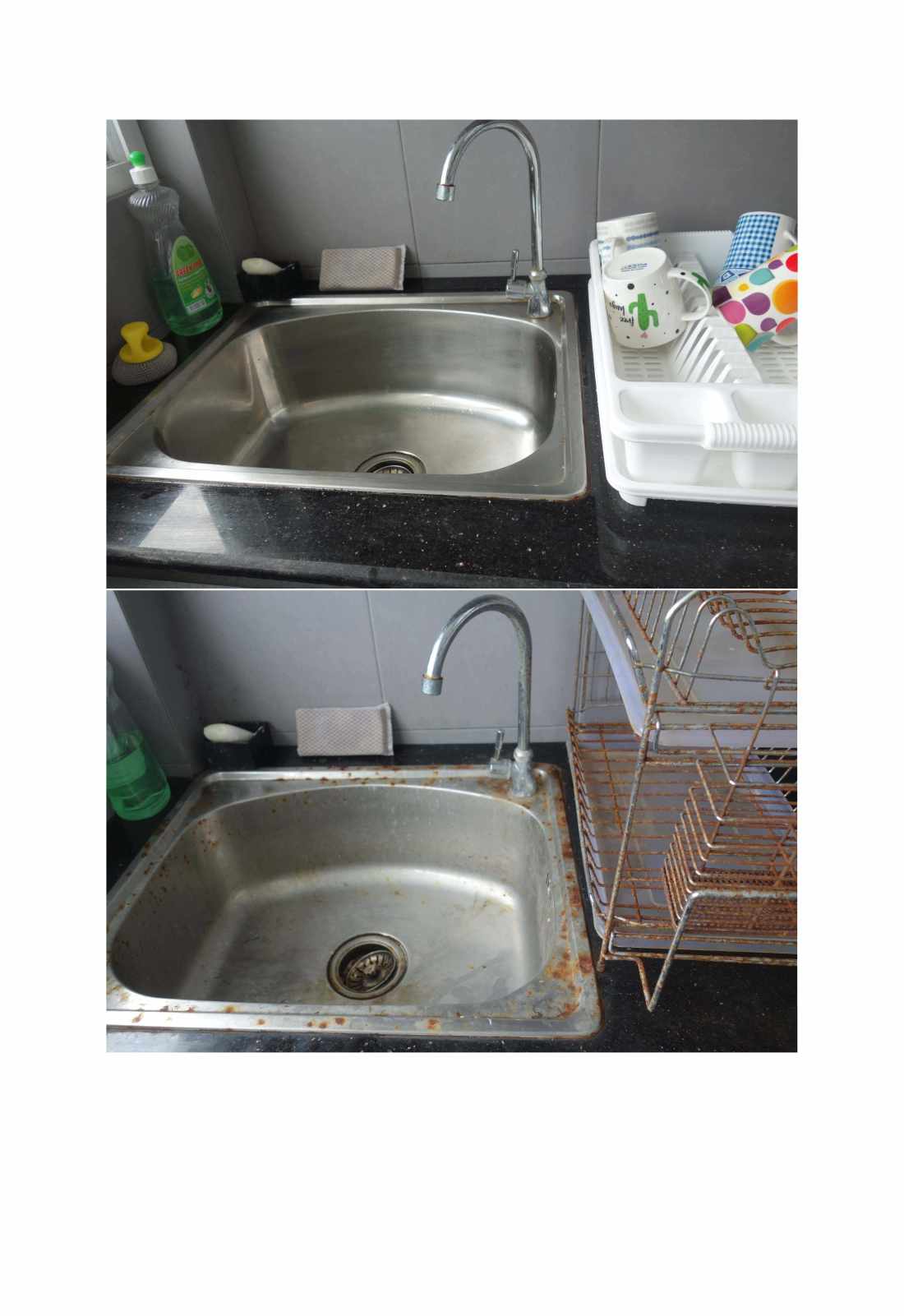
[Above photo: Chinese Stainless Steel is a 3 word oxymoron. These are the after and before pictures. Not sure I want to fly on a Chinese-manufactured airplane. Recall Japanese goods right after WW2? Synonymous with junk. Made in Usa. Look at them now, standard-setters.]

After passively watching the kitchen sink develop rust measles and the dish drainer stain all the dishes ferrous oxide brown, I bought a steel scouring pad, cleaned up the sink, and tossed out the dish drainer. I have a new, cheesy white plastic dish rack and it has entirely improved my attitude when I enter the kitchen. In spite of the fact that it is so humid I cannot open my (wood-handled) Opinel knife.

Hiking around town yesterday (14,511 steps!) I bought walnuts (thi ja) at the wholesale market and climbed the steep stairs to Pomelo, a wonderful gallery which is also a social enterprise affair, showcasing and selling crafts from all over Myanmar. I previously met the woman who started and runs it and figured she’d know a carpenter I could employ. Her assistant in the shop did, in fact, and soon I was in a taxi, heading for an obscure address in Yangon far from downtown where I live.

After much backtracking and, finally, a phone call to the carpenter’s wife, we arrived at Helping Hands Furniture and Flame Tree Sewing. U Zaw was a successful contractor until 2008; after Cyclone Nargis, he quit his job and started a furniture school and workshop for street boys. His wife has a sewing school and workshop for street girls. They are lovely people and the boys working in the shop looked to be very pleasantly engaged as they worked, making beautiful pieces.

I brought with me my childlike drawings of a doll house I wanted to commission for the Child Mental Health Clinic at Yangon Children’s Hospital. After some measurements and discussion, U Zaw suggested a price, of which I paid half upfront. He said he’ll have it for me in a week. I also gave him a drawing, with dimensions, for a small sand tray to use in the same office. After I see the quality of the doll house, I’ll ask him to make the other.

I then cabbed to Jose and Irene’s beautiful home and Jose and I sat on the covered porch facing a thick, lush wooded area.  My main interest was to learn about his complex social enterprise and consulting start-up.  He is a very thoughtful and experienced guy with a law degree and an MPH from Harvard. Kelly joined us from his home next door and I discussed with him about visiting refugee camps in Rakhine State with his organization.  If I go, I want to play a useful role, not simply be a voyeur. He has good ideas about what I might do, so that should be a go with him in late October.  We talked and drank beer until hunger struck. So prompted, we walked down Kokkhine Swimming Pool Lane to Red Dot, an upscale sports bar open on all sides to the elements, and had yummy burgers and more talk before I headed home.  

Three days ago I managed to transport 6 chairs and a video screen to the hospital before the students arrived. I wanted to surprise them. Our “Isolation Ward” area of the outpatient department was locked so I sought a nurse to find the key. The head nurse in the Triage Area was a tough cookie, tight mouth, jaw set, head shaking “No.” much more easily than “Yes.”  After some conversation mediated by a junior doctor who spoke English, the nurse made a phone call to the hospital superintendent.  All I understood was “foreigner” and “professor” and “University of Medicine 1”; it did the trick, the door was unlocked, and I moved the stuff into clinic. It made me realize that, despite my title and the adulation given to me by my students, I have no standing here outside of my tiny world. I think I’ll bring the nurse flowers on Monday in thanks; I want to surprise and soften her up a bit. Later in the day we managed to brand all the chairs with a Magic Marker and hang the screen. Adding the doll house and sand tray will lay claim to the space for the trainees who start in January, as well as give a model of a playroom for the students.

I had a discussion with them about the class: Were they getting what they wanted/needed? Were there other topics they wanted covered? Should I make a mid-course correction of my pedagogical style? One student, a very thoughtful woman simultaneously getting her PhD, said she liked it all except my classroom management, which she implied was too loose.  I thought about it for a couple of days and brought it up again. I realize that I am on the looser end of control but the alternative—snugging it  up tight—would shut them down, I feared. She replied, ”We’ve never had a class like this. In our classes we sit quietly and take notes. Because you are kind we feel free to speak our minds.” I said, to myself, “I rest my case”.

My style, while it wouldn’t suit everyone, is an expression of how I want them to be with their patients, both adult and child: tolerant, encouraging discourse and disclosure. There is content they need to learn, of course, but they seem to be doing that. Their hurdle was exemplified two months ago when three of them asked me, “What do we do if someone cries? Do we change the subject?”

I’ve never seriously thought about teaching.  How is it done most effectively?  Usually I have just been intent on gathering, mastering to some degree, and presenting the material. It depends on the subject matter, I suppose, but the process of openness and acceptance encourages risk, questioning, trial, and error, even with math and physics. I recall when in college we felt superior to the great European universities where we (mis?) understood that you didn’t challenge the professor, merely grumbled to yourself or classmates in a cafe after lecture about how misguided/out of touch s/he was. That may not have been so then; surely it cannot be now. I do recall  challenging the personality theory guru, Gordon Alport, in a psychology lecture class;  his book was our text. I merely mentioned psychoanalytic theory, which he left entirely out of the discussion (and the book), and he got furious, shouting at me in front of 250 students. He was ill-tempered and elderly, a bad combination. I probably did it provocatively, as well. But I do think that we are all learners. Like plants, we grow or we die.  

Speaking of the living dead, after the election of 2016 I remember learning that DT made money with his bankruptcies by stiffing his creditors, workers, and investors. I wondered how that would play out when he was president. Now we are seeing and the US, with a massive budget deficit, the threat of a recession, angry and insulted allies and trade partners, and a rising tide of White Supremacy, will be left with the detritus of his impulsive, manipulative narcissism.  He’ll make off OK financially; his base won’t. Hopefully he’ll be in jail for awhile where he cannot spend it freely.

Guns, Germs, and Rain

18 August 2019

[Above photo:  The National Botanical Gardens at Pyin Oo Lwin.]

Picking up the thread, I left our poker game last Sunday at midnight, walked a few blocks in the dark and caught a cab home. It is lovely to feel so safe here. Moreover, I was disciplined and a bit thoughtful at the game and lost only 1200kyat (80cents) over the evening, not much for a newbie having an evening of fun with much laughter.  New to the game was a young woman doing an internship with an NGO here. She’s grown up in both Brazil and the US. Her brother was a professional poker player, but she hasn’t played before, surprisingly.  She was, she told us, voted the “most aggressive” on her college varsity basketball team. It was interesting to watch her struggle to hold back and when she did press forward with 4 kings (In Night Baseball, 9’s and 3’s are wild, leading to ridiculously high hands.), someone else had the equivalent of 4 aces (one ace showing, three wild cards buried.) Her aggression and physical prowess on the court didn’t count for much here and she was unhappy: “I don’t think I like this game.”

Today I set out at 1:30PM to have lunch, purchase 6 plastic chairs for our new clinic, and buy a portable screen or white sheet on which to show PowerPoints there. I ate at a tiny, new (to me) Japanese restaurant which was empty of people and the food very tasty. Like taxis, there are so many restaurants and most seem empty; I’m not sure how they survive. When I go in the upscale malls, there are fancy, branded stores—Gucci, Shiseido, l’Occitane en Provence, Burberry—and I see plenty of young, pretty salesgirls but never a customer. What’s the point? And what an incredibly boring job, standing around all day trying not to fall asleep upright. Are they franchises to launder drug money?

Back to my day, the rain began to pour so I drank tea, stayed dry, and read more of “Beloved” by Toni Morrison. It is powerful and painful to read, the more so given the racist blather blanketing much of our country. The value to me is that it shines a light into corners of history that we all, I think, prefer to ignore, as shameful and hideous as they were. And those images illuminate the present atrocities, which I also find difficult to stay fully aware of.  It makes me think about the epigenetics of rape, lynching, flaying, and having your children sold off so you’ll never see them again. How that gets into our inheritance and bones by more than oral history and memory.

When the shower lightened, I walked and inquired and walked some more, eventually finding a store that had a wall-mounted projector screen. It was a bit heavy but I carried it 2 kilometers home on my shoulder, earning some stares. I then cruised down Sint O Tan to Tea Black and bought a red bean smoothie with pearls, those little black chewy tapioca tadpoles. I’m just now home and the heavens have opened again; for once my timing was excellent. Most of my students love the rain, because it brings the temperature down. I suppose people living in climate extremes talk a lot about the weather; I do here and in Maine. I rarely thought much about it in Berkeley, except for the drought and fires.

I’m attempting to leave things so the next training can go smoothly. I’ll donate my printer, my portable PP projector, the screen, etc. in support of it. Fulbright gives us an allowance for this sort of thing and I don’t think I’ve exhausted it buying books, of which I sent a large box by diplomatic pouch. I feel a little badly, teaching this course and then decamping. I did when I left Malawi, as well. You care about people, especially those you have taught or have cared for, and can anticipate some of what they will encounter. I’d like to help them with their futures. My own child and adolescent psychiatry fellowship was two years with a lot of supervised psychotherapy and I felt green as grass when I graduated, so I can imagine what they might feel after only 7 ½  months.

But my thoughts are turning ever homeward, looking at property and houses in Maine on Zillow and finding much that is very inexpensive and appealing. For example, 3 acres on the ocean with a 2-3 bedroom house cum garage/workshop. I think, as much fun as planning a new house would be, it is quicker and much less expensive to buy one already built, if carefully inspected. I need a car, as well. Jeez, all the appurtenances of the American Dream. If I do buy on the shore, it will be at least 50 feet above high tide line, given climate change and DT’s wish to buy and plunder Greenland. He’d probably use the gas deposits to melt the icecap so he could mine and drill underneath.  If the Danes ever dared, I’d stop eating cheese Danish and probably Aebleflæsk, as well, in protest.

The Israeli-Palestinian issue is so fraught. When I reflect how there was almost a two-state solution with the Oslo Accords and how far we are from that now, it descends to tragedy. Afterwards it seemed that Yasir Arafat sabotaged it; I recall sentiments suggesting he was a conflict junkie and didn’t feel he’d have a power base if there was peace, but I’m actually not sure where the will for it flagged. I do think it was crap of DT to move our embassy to Jerusalem. And I do think the settlers, as righteous and ordained as they may feel in their orthodox faith, should be pulled back. They are probably to the Israelis as the Palestinians are to the Arab world: unruly, explosive, determined, and felt to be better used as pawns in the front lines of the chronic antipathy than to be embraced.

The Nagar Glass Factory was founded in the 1950’s by a tea merchant who was an amateur herbalist and wanted airtight glass containers in which to store herbs.  He brought in technicians from surrounding countries and developed the first glass factory in Myanmar. They’d drive a truck to the beach near Meik in Lower Burma to get very pure sand. They had big gas-powered brick ovens, crucibles, and all that is needed for handmade glass. They made elegant glasses for high-end restaurants and customers, jugs, chess sets, and shrewd inventions. Like a two-part piece for shrimp cocktail, with ice in the lower goblet. And a fabulous jug for white wine with an attached, invaginated globe in which ice was kept. Anyway, there were a number of setbacks, including the military government demanding to know where they got their sand and then expropriating that area to supply their own glass factory. Then there was an arbitrary increase in the price of natural gas, 500x overnight. Finally, Cyclone Nargis in 2008 toppled over all the sheds and ended their glass manufacturing.

However, left with many, many piles of glass objects scattered  about the woods, all of which had been in the storage sheds before their collapse, one of the owner’s sons now ekes a living out of letting people “mine” their own and then charging them for the pieces they want. I bought 5 glasses, lovely, for a little under $3 apiece. Robbery in Myanmar but certainly worth it to me. I’ll return for a longer visit wearing boots  (for the glass underfoot), long pants and a long-sleeved shirt, and repellent (for the mosquitoes). I do not want to get dengue or chikungunya and their vectors were in abundance.

I’ve had some discussions with the students about confidentiality. Physicians in Myanmar will describe a puzzling case on Facebook to get suggestions from other docs. I questioned the practice, mentioning the use of closed list-serve groups that we employ for similar purposes, limiting the audience to vetted professionals. Then I began to think about describing cases in my blog and I wonder if I am violating my own precepts. Part of me thinks that I am, although no one who reads this will ever know any of the children I describe. I suppose I do it to make the blog interesting and to convey with more meaning what the work and life here is like. The ultimate test would be to obtain signed permission from each patient; I doubt most would agree, since this isn’t a private, professional audience. It isn’t as though I have a massive following. I know I’ve felt critical of Irv Yalom for writing extensively about patients, as have others (Robert Lindner The Jet-propelled Couch and Other Stories come to mind). Disguise may work most of the time but not always. I’ll think about it.

There was a huge mudslide near Mawlamyine, the site of Kipling’s “old Moulmein pagoda”, which covered a line of cars waiting to cross a flooded bridge. 52 killed, buried in mud, and more missing. The mudslide is felt to be due to careless logging and mining activities in the hills above the road, denuding and unsettling the land.  With bribes you can do most anything here.

There were coordinated attacks on a number of police and military sites, including the Military Technological University, in the Pyin Oo Lwin-Hsipaw-Naung Cho area where I was a few weeks ago. Several armed groups [the Arakan Army (AA), the Ta’ang National Liberation Army (TNLA), the Northern Alliance (NA), and the Myanmar National Democratic Alliance Army (MNDAA)] coordinated the attacks. I support their desires for more autonomy and to be free from oppression and exploitation by the government, but I seriously doubt that these attacks will do other than harden the government’s resolve and displace many civilians caught in the crossfire, as they have over the past 60 years. Also, it will certainly squash tourism, which brings much-needed business to many.

In 1962 then-Burma was the most prosperous country in SE Asia. Many government missteps, regional conflicts, and natural disasters later, it is currently #127 in world ranking, below all its neighbors except Cambodia. Of course, Malawi is #182, 4th from the bottom. Lest you think that chaos, corruption, and conflict are incidental to prosperity, the Democratic Republic of Congo, probably the most abundantly natural-resourced country in the world, is #183. And Malawi has beauty alone, with no drillable/mineable natural resources.  The irony is that the US has a thriving economy when we are at war in someone else’s country, at least for the first several years of the conflict.

This all makes it more difficult for me to leave since I want to help in tough times. One of my students was walking with me in my neighborhood, on her way to buy some porridge for supper from a vendor she likes on 19th Street. She said, “Professor, you should stay here for 2 or 3 more years. You could really help us a lot with Child and Adolescent Psychiatry.” It is flattering but not tempting. I miss home.

Sodden

11 August 2019

[Above photo: Ginger blossoms and a pagoda in the National Botanical Gardens in Pyin Oo Lwin.]

In an average year, Yangon receives 28 inches of rain in August alone and 2019 is no exception.  It rains 37.5 inches in Seattle in a year, and Seasonal Affective Disorder fells many there. Maybe it’s the number of grey days. During my internship at Harborview Hospital one intern’s spouse counted 90 consecutive days when no patch of blue was seen. I knew then that I couldn’t settle there.  As a kid, until we moved to Denver at 12yo, I loved it in the Northwest and never thought much about the rain, even when regularly soaked on our Scout overnights. You always dig a ditch around the circumference of your tent when camping in the Cascades. I vividly recall a great camping trip with Harold in the Sierras where we met rain, it was so unusual.  Both Nate and Christopher were good sports about it. Returning from catching trout at Lake Constance (?; 11,000+feet) we paused in the drizzle under a dry tree to lunch and read aloud from Bruce Chatwin’s In Patagonia. Returning to our campsite, we discovered we’d pitched our tents in a granite bowl thinly covered with pine needles. The tents were literally floating but dry inside, a testament to their waterproof floors. Some poor guy was crouching in his tent with his two young kids, wet and miserable. They were pulling up stakes, having just arrived, and gave us lots of food they didn’t want to carry out. Canned tomatoes, I recall. A first trip, I’d guess. Maybe a last.

The electricity was out this morning. Is out. It came on briefly and then is off again as I write. This happens very rarely here and usually briefly, although often enough that I have used my portable PP projector several times for a lecture. I fired up the little propane burner I asked the landlord to supply when I moved in and made some tea. It recalled camping in Namibia, Zambia, and Botswana at this time last year and the fun of brewing tea each morning. That was a very special trip. I probably wouldn’t have done it, except for Linda and her long-time desire to camp in Namibia. I say “probably” because when I found out our friends, Peter and Caroline, were doing the same trip I might have signed on.  But prior to that, I confess to have known nothing of the beauties of those countries.  It was a fabulous time, with no mishaps except missing the once-in-a-lifetime total eclipse of the moon because I was choking and gasping, focused on trying to start some green wood for a cooking fire. Otherwise, minimal discomfort, maximal excitement, no real danger, and so much beauty.  Truly a once-in-a-lifetime road trip.

I dropped by the Drug Elimination Museum yesterday. I’ve meant to go since I first read about it in January. It is a monstrous, 3 story, concrete structure set on spacious, overgrown grounds with many stray dogs. It really is just a monument to General Than Shwe, who was the Senior General, head of the Tatmadaw (Military), and Head of State from 1992-2011. His earlier career included directing a war on drugs in Shan State, especially, as he was rising through the ranks of the military. He also attended a KGB intelligence training course in Moscow and another senior officer training course there. As Head of State, he was reclusive, made some very poor economic decisions in the name of state socialism, refused to let the majority party, the National League for Democracy, and its head, Aung San Suu Kyi, participate in the 14 year drafting of the Constitution, and listened to soothsayers for advice. (His predecessor, General Ne Win, once shot a mirror in his house to avoid bad luck.) He was seen as a humorless, sullen hardliner. He refused to allow foreign aid into the country to assist after Cyclone Nargis, fearing an invasion and contributing to the deaths of an estimated 130,000 people. And refused on two occasions to meet with a high-level UN envoy.

The museum has three floors with many photos and portraits of Himself, numerous immense dioramas of poppy fields and battle scenes (The cubic meters of earth in that building!), and endless illuminated battle plans and detailed inventories of drugs and chemicals seized. It wasn’t just opium or heroin. There were bales of cannabis, hundreds of thousands of methamphetamine tablets, endless barrels of volatile hydrocarbons (toluene, ether, etc) used in the manufacturing processes, and sophisticated pill machines. On the first floor was an intact airplane, one of a fleet used to spray 2,4 D on the poppy fields. And the rear fuselage of a government fighter plane shot down by the drug lords. There were plenty of photos of “drug kingpins” being hauled away. There was a full-sized steam (diesel) roller crushing bottles of methamphetamine pills. One blurry photo caught my eye—a man being “operated on” to remove 22 packets of heroin—“.99kg”— from his stomach. Lots of burning drug labs. Even pictures of the British during the Opium Wars in China, shooting Chinese citizens. And an allusion to the oft-told-tale of the CIA profiting from the opium/heroin trade here.

Call me cynical, but I cannot believe that, as corrupt as they were, the generals didn’t find a way to make a fortune from all the drugs that they confiscated. BTW, Myanmar is currently the #2 supplier of opium/heroin in the world, trailing—you guessed it—-Afghanistan. So much for “Drug Elimination”. Colombia, Mexico, Pakistan, Thailand, Laos and others all make their contribution. Much of US heroin comes from Mexico and, decreasingly, Colombia but the players are agile and things shift quickly.  Fentanyl, the current killer, comes c/o China. 70,000 drug OD deaths in the US last year.

There was, of course, nothing about the addicts, the life conditions leading to their addiction, or efforts at rehabilitation.I can hear the military saying, “Weakness” and “Not heroic or dramatic enough.” as they planned the exhibits.

Interdiction is part of the fix but the thorny main issue is demand. How do we give enough people in the US enough hope for their lives and futures so they don’t turn to drugs to feel better? A simple formula, I think, of good education and vocational training, reasonable salaries and job security, and accessible health care.  This can only come, in part, from decreasing the wealth gap, which can only come from revising the tax structure progressively. This will only happen when legislators aren’t forced, and able, to rely on rich donors to get elected. So, we need election reform desperately. Publicly-funded elections seem far off, I fear.

My students will each have completed formal intakes with 10 children/families and will have observed and discussed several dozen more. We are gradually developing new clinical quarters at Yangon Children’s Hospital. In the outpatient department there is a section labelled “Isolation” for—-what? Ebola?  “Wash your hands well after clinic.”  It isn’t currently being used and there are 3 or 4 decrepit rooms with doors where we can see patients, at least on Thursdays. There is another section of a separate building that has 3-4 rooms, as well, that is completely unused which we’ll try to claim and possibly renovate. Little by little this subspecialty takes shape. It is strange to me that Child and Adolescent Psychiatry, whose target population is the foundation of the future, should be the subspecialty, not Adult Psychiatry, far downstream. By 14yo 50% of adult mental illness has raised its head; by 21yo, 75% has. In Malawi, with a birth rate of 4.8 children per family, half of the population is 16yo or younger. Here, with a birth rate of 2.1, about a third are under 18yo. Sigmund Freud, Charcot, Benjamin Rush, and historical precedent, I guess, although Anna Freud got it right.  Plus, adults are noisier to civilization than are children. But I digress.

We saw the 17yo girl who’d been regularly raped, 3x/week, vaginally and anally, by her uncle since 8yo. She lives at the Girls Training School where she is a star in her sewing class, has made several friends, and is allegedly eating well, although she remains very slender. Thankfully she didn’t have to face him in court at his trial. She now smiles faintly with us on occasion. I can only assume that her early years on the Myanmar-Thai border with her mother, who was a sex worker, must have included a close, positive attachment. The tale is that her mother tried to protect her from her livelihood. She certainly has had multiple traumata since then, with her uncle’s abuse and her step-grandmother beating her and telling her she was stupid, as well as the deaths of her mother and grandfather. But she doesn’t exhibit the multiple-domain dysfunction expected from such circumstances, as is well-described in the literature. She doesn’t have behavioral problems or difficulty with affect regulation. She is able to form close, positive attachments, and seems capable of learning. She’ll be attending school soon, to learn to read and do simple math, since she hasn’t had those opportunities before. Resilience, we call it.

It is noon and starting to warm. I hope the electricity resumes soon, as I’ll need aircon if I want to work. I plan to read The Theory of Poker by David Slansky. There’s a game tonight and I don’t want to keep losing.  Self-respect.


Smoking Is Cool, No?

4 August 2019

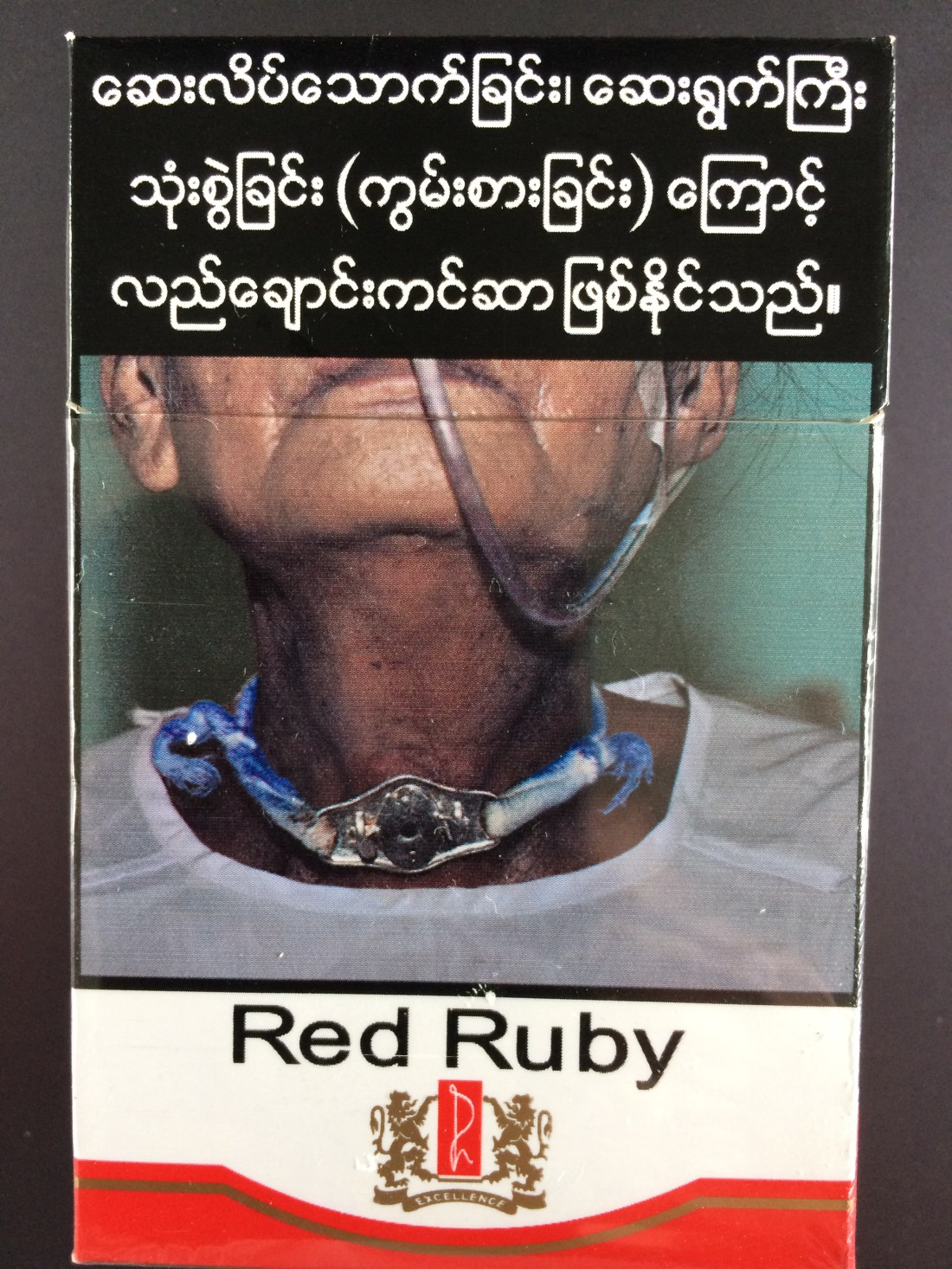
[Above photo: All cigarette packages have either this photo or one of a very nasty cancer of the tongue on the front. What you can do in a government without lobbyists and privately-funded elections!  Why do we in the US allow vaping companies, basically drug dealers, to flourish? Reynolds Tobacco and Liggett and Meyers are thrilled to have a new generation addicted to nicotine. ]

One of my students and her husband took me to supper the other night. We went to a Wa (ethnic) restaurant, hip by Western standards, with superb food.  I prefer the different tribal foods—Kachin, Shan and Wa—to regular Burmese food, perhaps because they are more novel. We laughed a lot and I found out about his work. He’s a seaman, a Chief Officer, on a 600 ft car carrier and similar-sized container ships which ply the waters between China, Japan, Australia, Singapore, and the US East Coast (through the Panama Canal). When a cyclone looms ahead, they simply stop the ship until it passes. He’s gone 8 months at a time and then home 3-4. They fly him out to the ship and back from it when it’s his leave/work time. The salary is much more than he could make here and he likes the work. He doesn’t like the absences, nor does his wife. They are incredibly cute together, chatting away and obviously very in love and enjoying each moment. He’ll take a captain’s examination in a year. Is it more work being a captain? Less work, more responsibility. Many Burmese men work on freighters; for their sacrifice they gain financial security.

It reminds me of Malawi, where so many men go to S. Africa, even just for menial work, and so many skilled men and women have job postings in cities apart from their family. The physicians in government service here all are forced to rotate around the country every 3-5 years, as are the military. Partly it is to share the burden of undesirable postings—generally rural and often in conflict areas—but it also is to diminish the possibility of their developing a power base which could challenge the government or, for the military, to discourage corruption. It’s why after the 1988 student uprisings and massacres they destroyed student union buildings and dispersed university campuses to small, rural towns.

Along those lines, there is a remarkably good-for-genre film based on a true story, “Beyond Rangoon” with Patricia Arquette.  It is about an American tourist who gets caught up in the 1988 student uprising. I bought a bootleg copy of it at a shop here; I find it amazing that it is available, since it shows the Tatmadaw (Myanmar army) at its most capriciously, viciously murderous, executing students and villagers, shooting fleeing civilians in the back, etc. The scenery was wonderful, as well.

My gut continues to trouble me, despite taking a course of metronidazole and another of azithromycin. CBC and stool samples are negative, so I may need an ultrasound or CT to see what’s up. That my mother and her brother both died of pancreatic cancer at this age isn’t reassuring to me. If I need much fancy diagnostic work, I’ll go to Bangkok. If I need treatment, I’ll head to Boston or New York. Rats. It does make me realize how much I love life.  Of course, it also brings my life into focus that an old friend is currently being treated for a gi cancer. I am of that age, I suppose.

I’m looking on Zillow for coastal property in Maine, either land on which to plunk a house or land complete with a house. The latter is less expensive at the outset but, depending on the condition of the place, it may be false economy. I’m excited about it, my next chapter.

Linda will come to visit in December and we’ll travel together in Myanmar and India, unless it coincides with the opening of her midwifery ward at Queen Elizabeth Central Hospital in Blantyre. Then we’ll adjust to Plan B.

I also want to stay involved here, shepherding child psychiatry training and child mental health. I can do video supervision and teaching and I can return for a couple of months a year, probably in the Maine winter when the weather is best here. So I have lots of fun and challenge and excitement on my plate and I want to pursue it all.

The US Embassy has a program—YSEALI, the Young Southeast Asia Leadership Initiative—in which they have local and regional workshops in different aspects of leadership to foster and encourage young bright minds. One of the participants, a general practitioner who attended a regional symposium in Indonesia recently, put on a morning program at the American Center in Yangon re. Non-communicable Diseases, including Mental Illness. I spoke to an audience of about 40 young people, some physicians, about mental health awareness and stigma in Myanmar. Others spoke, as well.

One young YSEALI-participant physician who has a lot of energy re. mental illness awareness did a bit on emotional first aid. His difficulty is that he craves public attention but has no mental health training.  He really hasn’t a clue as to what he is doing, other than perhaps from reading Wikipedia “Emotional First Aid”. I have told him several times that if he wants to be a National Expert, he needs at least to be informed and do a psychiatry residency or some similar training. There are no short-cuts.

Like many of his persuasion, and I think of our Narcissist-in-Chief, he assumes he’ll just know what’s important and doesn’t have to bother with the work of learning it. Why listen to experts? Why read intelligence briefings? Mr. T. already is smarter than those fools who waste their time reading.  I can recall, with a little embarrassment, times as a child, and even occasionally as an adult, when I felt similarly. I think that’s part of why this experience is so satisfying to me; I’ve really put my shoulder to the wheel and it shows in my output and in the students’ knowledge.  I felt the same satisfaction in my work for many years in Berkeley.

I finally cruised through Yangon General Hospital with one of my students. I wanted to see it and compare it with Queen Elizabeth in Malawi. YGH has a capacity of 1500 inpatients. The main building is an immense, 100 year old, beautiful two story British colonial-style stretching for blocks along Aung San Bogyoke Street. Grand in concept with vast arches, marble floors, sweeping stairways, lovely ironwork, and beautiful windows, it has much in common with QE—-immense wards crowded with families, sheets and food courtesy of each patient, noise and commotion, and people from far away sleeping overnight on mats on the floor of outpatient clinics in order to be seen. All clinics are drop-in, which cultural habit will require  a shift in order to participate in psychotherapy. There were rows  of aluminum chairs bolted together in the waiting areas, a step up from our backless wooden benches at QE. In the psychiatry outpatient department, two or three senior psychiatrists, often with students observing, work in a single room; in Malawi we each worked in separate rooms.  “In our culture, privacy and confidentiality are not so important.” Perhaps, but if they were provided, I think patients would appreciate it and would go deeper into their tales.  There is a new building of surgical suites and a building devoted to interventional cardiology. How the immense enterprise works, and it seemed to be working, is an unfathomable mystery. I even saw the Dog Bite Center, since dog bites and rabies are common. Venomous snake bites and poisoning cases go to New Yangon General Hospital, which is across the street and down the block. But like county hospitals everywhere in the US, for serious acute illness and trauma, the ED at YGH is the place in the country to go.

Chikungunya is rampant right now, bestowing a high fever, rash, and incredibly painful joints on the unfortunate recipient.  Two of my students have had it and another had 4 cases in her general medical clinic the other evening.  My friend, Martha, contracted it in Ghana and to see her agony was chastening.  I see the very occasional small mosquito in my apartment—-I mean one every two or three weeks—but otherwise haven’t seen any. Maybe it’s my vision. Mosquitoes never have liked me much and I don’t swell from their bites, unlike my poor kids who balloon up. I do get bitten by the frenzied swarms on Beach Island in Maine at times but they are as large as small ducks and easily dispatched. Dengue will come next month.

We were referred a couple and their 13yo autistic boy; they traveled for several hours to attend the consultation. They were so good with him.  The father is a seaman who took off work for 4 years after the boy was diagnosed so as to be with him. The mother is a dentist but is so skilled at reading and responding to the boy she could be the Dean of a Special Education graduate program. The boy was sweet, if very socially awkward and linguistically limited. He is obviously intelligent and we supported their efforts to help him discover his interests and talents. He doesn’t care about the piano but he likes to draw and can move around a computer with enviable facility. We had few suggestions, other than that they keep doing what they are currently and find some children’s books in which he’d have an interest, reading to him every day. He is in a good special school and even has some “friends” he misses on weekends and holidays. He is a lucky child to have such bright, tenacious, imaginative, and caring parents. I knew a couple in Berkeley who constantly inspired me with the same qualities in caring for their two children, but it is rare to see.

Now I must prepare presentations on “Substance Abuse” and “Eating Disorders” for this week. Hammer it out, Dems, and thin the field. We want to see who is left standing.  This election is more crucial, and just as thrilling, as 2008!

Sunday Breeze

28 July 2019

[Above photo: Omaung, my guide, with a woman in traditional dress bringing sugar cane as an offering to the 400 year old Topankam Village (Palaung) monastery, high in the Shan Hills, in celebration of the Full Moon of Waso holiday.]

I talked with my sister yesterday, wishing her a happy 90th. She is in good spirits, despite not enjoying the East Coast heat wave in her daughter’s tiny house in Bethesda with no air-con. She’s just returned from several years with her daughter et la famille in Cape Town. Quite a lot of flexibility for someone her age but, then, who’s talking. Her other children and their families arrive today to celebrate. To think, she was born the year of the Great Crash (in which our father and his brothers lost their entire fortune), and has seen a world war, the rise (and approaching demise) of the internal combustion automobile, several other major wars (Korea, Vietnam, Afghanistan, Iraq, the expensive and spectacularly failed “War on Drugs”, and dare I say Yemen, since we are the Saudi’s advisers and arms suppliers?), penicillin, globalization, heart transplants, collapse of the Soviet Union, and the rise of computers, which have handsomely rewarded two of her kids and engaged the third, a whiz with them.

Now the world seems to have moved to a new phase—populism and demagoguery, lies, lies, and more damned lies, disqualification or outright murder of the independent press, and the planet heating out of control while our Neros fiddle. I saw a chilling video yesterday, in between watching bits of Stage 20 of the Tour de France, in which an academic IT guy demonstrated how simple it is to hack and tilt the returns from electronic voting machines. He even turned one standard machine into an electronic musical instrument, a little pirouette at the end of his talk. You can bet the elephants in the room will work to steal the election from the donkeys, making jackasses of us. I can easily imagine the Republicans having a central strategy to cheat the machines, whereas I cannot imagine the Dems. OK, maybe a rogue or two here or there but nothing coordinated.

So I cannot imagine why the sociopaths haven’t always won, since they can do easily that which we of conscience cannot.  Electronic media floods us, amplifying the seductive (to some) message of the liars and drowning out reason. As Yeats wrote, “The blood-dimmed tide is loosed.”  In the past people could think more independently and make decisions in their best interest whereas now, given the addictive quality of smart phones and TV, any bozo or evil-doer can tailor their ?appealing (dishonest, racist, fear-engendering, and divisive) message to millions of people who are struggling and poorly educated and convince them that red is blue and a fierce cold spell is evidence against, rather than for, global climate disruption. When DT heard about the Special Counsel, he said, “I’m fucked”. Rather, Mr. Fuck-everyone-else, you seem to have the nation naively bending over to pick up the bars of soap you intentionally cast about the shower room. I don’t worry about the Dems squabbling now; people’s memory is so short the weaknesses revealed will be forgotten in the real run-up. And DT, racist and misogynist that he is, won’t be able to make many points out of the Dem’s concerns. A Biden-Harris ticket now looks good to me and hopefully palatable to many.

Since my giardia, or whatever it was, stirred up my gut, I thought I’d lay off milk for my tea and cereal for a few weeks. So I bought some soy milk. Turns out it also has sugar and whole milk powder in it. So what’s the point of the soy? Extra amino acids, I guess, and a profitable outlet for the soy crop. Untruth in advertising.

I sought out Ingyin Nwe South Indian Food Centre yesterday, about a mile from my apartment, as I was craving some Indian. At 3 in the afternoon it wasn’t wildly busy and I sat on a stool at one of the long stainless steel tables with dishes of different condiments and checked the menu. I ended up with a lassi and a masala dosa, both familiar to me. I worried about the ice in the lassi; surely it is tap water, which I avoid. Both were tasty but Viks Chaat in Berkeley has much better of each; lots more mango in the mango lassi and lots more filling inside the larger, more sour, and crispier dosa. Still this cost $2 whereas Viks would charge me $10, at least. Few skinny Indians in Berkeley, I think, with Viks’super-size-me portions.

It’s cool enough that I have taken to climbing the stairs to my apartment, 9 floors up. I did it twice yesterday. It just seems stupid to me to join a gym, since everyone in the two I visited looks about 18yo and trim and I have the stairs of my building handy. Of course, when the neighbors see me trudging up they are puzzled.  Agoraphobia? Claustrophobia? Acrophobia, they must wonder. Senesceophobia is more like it.

A 16yo girl who cuts herself repeatedly came for her therapy appointment with her mother this week.  Each time we meet with them the picture becomes increasingly convoluted. The girl was given up at birth by her bio-mother who had a puerperal psychosis and a prior mental illness. Somewhere along the line the biological father died. Her adoptive mother was a childless, unmarried woman, a cousin of the mother. Then the plot thickens, since both sides of the girl’s biological family are wealthy.  Now everyone resents the girl because she will inherit both her father’s and mother’s share of the fortunes, and the family animus generously includes her adoptive mom.  The latter is an accountant who gave up her day job to care for her demented, alcoholic younger brother and her daughter.  So she, the adoptive mom, depends on the largesse of her older sister who lives in another city and runs the family businesses for that side of the family. Most striking is the coldness all feel toward this girl, poor thing, and how it is all tangled up in money, old jealousies and dependencies, and generational dislike for anyone who might have a claim to some of the family fortune. My impression is that the courts here can be bought by the highest bidder, so why all the fuss?

In any case, talking with us—and I have one of the students listening to the mother weekly independent of the girl’s appointment—seems to be improving things somehow. Letting the pus out of a boil, I’d guess. The adoptive mother, in a constant position of supplication, despite doing the family a massive good turn by caring for the wretched younger brother, has had no outlet for her feelings of rage, pain, and helplessness except to focus on the girl’s shortcomings (And what teen doesn’t struggle?).  At first it all seemed like one of those hopeless tangles of monofilament line that occur when the bale on your spinning reel doesn’t click in place. Others are reeling in perch and bass and you are trying just to prevent yourself from either cutting out the entire messy section or tossing your pole in the water and slumping to the bottom of the rowboat with a beer. But if the line was once not tangled, it can likely, with patience, be sorted.  It’s an excellent example with which to instruct my students about countertransference and splitting and the dangers of each, if unexamined.

The students want, I think, to take me on an outing. I say “I think.” because their natural ana (Burmese for holding back) makes their assertions at times seem like a soft zephyr or a wisp of cotton drawn over the back of my neck. Did that just occur?  They tentatively suggested going to a place where for $20 you can be suspended for 3 minutes in a column of air, encased in a protective space suit and helmet. I think $20 x 11 of us=$220 and it seems silly. The many daily rain showers are so reliably unpredictable that a walk in the park with a picnic isn’t appealing.  I’ll think up something else, which we can always complete with a nice lunch at a restaurant.

Martyr’s Day

21 July 2019

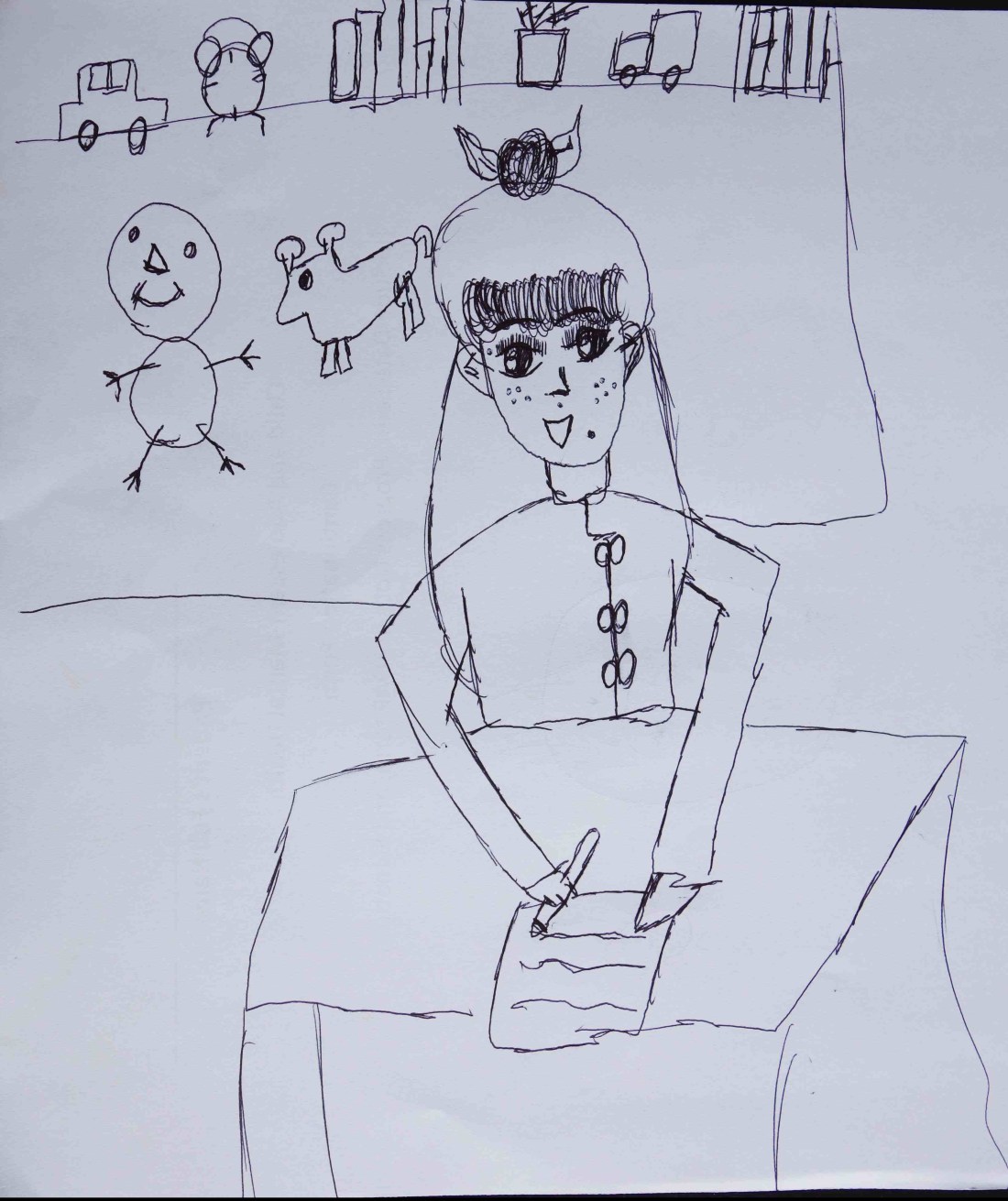
[Above photo: A drawing by our patient of herself in her future toy store, taking inventory. She is 9yo and quick as a whip.]

Since there were two holidays this week, I cancelled classes and only three of my students were in clinic the two mornings we were open. The others were on “holiday”, caring for their children, giving lectures, working in their private clinics, etc.

In our clinic we saw a 9 ½ yo girl who told her mother that she wanted to have sexual intercourse. In the course of her mother trying to understand this, the little girl confessed to having been touched in preschool as a 4yo and having seen pornography on her mother’s phone recently. The girl is a whiz in school and has lots of friends. She wants to open a toy shop when she is grown and drew an elaborate picture of it for me [see above]. My student did a wonderful job of psychoeducation with the mother and daughter, further enquiring about the possibility of molestation, and reassuring each of them that the above incidents seem to have sped up her timetable. In addition, we talked about her intelligence and curiosity and how we want to celebrate them but help her pull the reins on her sexual actions. All in all, I was so proud of him, as he felt of himself, learning to understand. We are taking her off the antipsychotic and antidepressant she was put on by another psychiatrist!  When I asked her to play the Squiggle game, in which two players alternate making a mark, which the other player elaborates into a drawing and a brief story, in sequence she drew the sun rising over the mountains, a very cute kitten, and a hen or duck with 3 eggs. She also autographed it, like the little artist she is. She looked much less anxious at the end of our visit than at the beginning, which may have resulted from familiarity with us but also from a frank discussion of sex with her mother in front of her. She seems like a happy child pressed forward by experiences. We’ll see her in follow-up in a few weeks to determine if psychotherapy is indicated.

We also saw in follow-up a 12yo intellectually disabled boy. He was initially seen by us because of his aggressive behaviors and as we discontinued one antipsychotic and tapered off the other a general practitioner had started years ago, he improved. He recently got the flu, with a high fever and aching joints, and became quite difficult again. He told his mother that he wants to have sex with her. I’m not exactly sure what he means by that.  When we saw him he was initially quite agitated but as we talked he calmed down, giggled appropriately with me, and ceased posturing aggressively. The parents are quite pleased, overall, and feel that his febrile illness triggered the latest deterioration in his behavior. They are happy to decrease the medication he is taking. We’ll see him in a month or so, as he lives a long distance from the clinic. I think the students are catching on to how powerful being heard and understood, as well as family interventions, are as therapeutic tools.

I managed to contract giardiasis just before my short trip, the fourth such infestation on my passage through this life: in the Soviet Union in 1972, Yosemite back country in 1974, Malawi in 2017 and, now, Myanmar. It isn’t wildly discomfiting, since I sleep alone, but the gas is thunderous. Metronidazole, which I am now taking and with which I feel better after 1 day of treatment, costs $.33 for 25 tablets. The equivalent in the US costs $16, which is 50x as much. It is possible for me, a retired physician, to pay an exorbitant amount for drugs but it isn’t fair for those who struggle. More is spent on Marketing than Research and Development in the Psychopharmacology Industry, not surprisingly. I don’t know if that is the same with other medications. The massive profits are for shareholder returns and executive salaries/perks. Capitalism is a powerful system but needs reasonable containment or it becomes a devouring monster. It’s like a force of nature, neither moral nor immoral; morality, as with DT, isn’t in the discussion. And like him, it needs firm minders to contain and clean up.

There was a poker game again last night at Kelly’s. A British woman and an Indian man cleaned us out. I have read a bit about Texas Hold ‘em today and ordered a classic book about strategy. I am the least experienced, if the oldest, and I don’t like to seem like a dummy. Nor lose my $. But I enjoy the game and the company. I’ll read about it and begin to use my brain more, which should improve my chances. I have drawn crummy cards, however, so I want to be ready to seize the moment when the good ones begin to appear. It is a funny thing, poker. It has a cool, in-the-know aura about it, all sorts of rules and regulations, and nicknames like “the hole”, “the blind”, “the turn” or 4th street, and “the river”, plus names for various card combinations: Ace-Ace can be “Alan Alda”, “Batteries”, or “Tee-pees”, whereas Ace-King might be “Anna Kournikova” (Looks good but never wins), “Kalashnikov” (AK-47), and “Korean Airlines”. King-King is “Brokeback” (after the film of the same name), “Gorillas” (King Kong), and “Donuts” (Krispy Kreme). Double nines would be “German Virgin” (“Nein, nein”), and so forth into the very scatological. I don’t care about the cool, so much; it just doesn’t hold much interest for me. I do want to know how to play a good hand. I’m capable of folding a poor hand. Mostly, I want to know how to distinguish one from the other.

School begins again tomorrow. I’ll assemble some more talks to complete the syllabus but what the students really need is more supervised therapy practice. Since they interview, and do role plays, in Myanmar, I have to sense from their non-verbal cues how they are doing. I’ve heard a few of them—My god, there is a stupendous storm with rain simply gushing from the clouds!—ending sentences repeatedly saying, “No?”, as if lecturing and demanding affirmation.  I have to get them back to asking open-ended questions, making facilitating statements, and listening. I have 2 ½ months only left with them, and the last week will be examination week. I want to fine-tune my teaching to the areas where they need the most help. Perhaps it’s the giardia or the late night poker, but I feel kind of weary today.

My sister turns 90yo next week. Given how early people die in our family, that is miraculous and inspirational. Her children will gather from afar to celebrate with her. I’ve always assumed I’d die young like my father, grandfather, and older brother, but, since I’m no longer young, that isn’t a possibility. I do, on balance, love this life and its possibilities. I must buy a car and arrange for a home when I return to Maine. I’ve been thinking about one of these—http://thegohome.us/—plunked on a couple of acres of waterfront but it may be overall more sensible to buy a home intact. Or even rent for a year or so while I decide what’s ahead. My mind is definitely turning toward home these days.


Lan ma ______________ ko weh chin de. Part 2 [I want to buy a ticket to ____________.]

18 July 2019

[Above photo: High on an idyllic plateau in the Shan hills with its own spring, this farmer’s son is preparing the paddy for rice planting. Previously he used water buffalo to plow.]

Sitting on my deck overlooking the river at Mr. Charles’ Riverside Lodge, I suddenly felt no desire to spend the next day in Hsi Paw, going through markets, looking at British colonial mansions, and visiting the now-powerless nephew of the last sawbwa (sky prince), Mr. Donald,  of Shan State, reduced to seeking donations from visitors at his fading “palace”. I asked the lodge management to contact a guide to take me into the hills for a trek. I noted that I only brought flip-flops, as I hadn’t planned on “trekking”. A trek (“across Antarctica”, for example) sounds like quite an undertaking. I was up for a restful holiday, until I realized that a day “trek” was actually a “hike”; nothing relaxes me more than a good hike. I was assured that the guide had an extra pair of shoes.

When Omaung appeared the next day at 8AM, he had with him a pair of trail runners a customer had given him. I had no socks. And they were tight. But we set off, me with camera and my water. ½ mile up the road I had a blister, so we called the lodge and they sent someone by motorbike with my flipflops. As long as it didn’t rain, turning the clay to greased Teflon, I would be fine. Omaung thought that we should all three pile on the scooter and zip to the trailhead where the hills and scenery began. That we did; it felt funny to be sandwiched tightly between two guys, as it would in another way between two women. It is astounding to see a family of 4 or 5 all squeezed onto a scooter, never mind that 1 in 20 wear helmets. Often only the father who is driving.

Up we climbed for 3 ½ hours with little pause, on quite steep trails. As we left the trail for a deeply-rutted dirt road and it was getting warm, he suggest we motorbike up the last steep section on the way to his village. Did I mention he was Palaung? It’s a small hill tribe in scattered villages with their own language, very different from the much more numerous Shan. Omaung spoke Palaung, Shan, Bamar, and English, all fluently. He is a very smart cookie but I couldn’t convince him, a father of 3, to wear a helmet on his motorbike. He called his sister and she and her cousin appeared in 15 minutes on two bikes. I mounted up behind his cousin and we zipped up a lot of steep hills. I was grateful. Then we walked the last bit into Pankam village. We went through the monastary to his house where he showed me their clever technology, all hand-powered, for processing tea, and then climbed to the second floor where I met his sisters, father, and mother. His father had a right-hemispheric stroke 7 months ago and was languishing about. After asking permission, I did a bit of a neurological exam and found he had good strength so encouraged them to get him up and about, emphasizing that recovery can occur up to a year after a stroke. He may also have hypertension, as he seems rather forgetful to them, and may have had mini-infarcts for awhile. There is no medical care in the village, other than a traditional healer/herbalist.

The lunch was amazing; vegetarian, all collected or grown locally with two kinds of wild mushrooms. 5 distinct dishes, wonderfully prepared. We later toured the village, walking on dirt paths up, down, and all around. He demurred going to a party to which we had been invited celebrating the new monkhood of a young man —as we walked by the house, he said they were drinking and getting too rowdy.  We examined the tea plants from which the village earns their living and made a nice circuit of the homes. The quiet simplicity of the village life, coupled with the lush beauty of the maize and soy fields, tea bushes, rice paddies, and surrounding thick jungle-covered hills was impossibly alluring. But Omaung lives in Hsi Paw with his wife and children much of the time; the children get a better education and he and his wife can earn more without the uncertainty and strenuous labor of farming. Still, it evoked similar times in our country 150 years ago, romanticized.  [I just finished Little House On the Prairie and On the Banks of Plum Creekstimulated by Linda, so I am primed to dream the pioneer rural life.]

We boarded his motorbike and headed down-down the roller coaster. I had something like a helmut on and said, “Pyay, pyay” (Slowly, slowly) when we started out. I felt safer but a bit wimpish when a young man passed us, his wife sitting sidesaddle and holding their infant. I was deposited safely at the lodge and then had only to shower, eat supper, and figure out how to get to Lashio the next day. My plane left at 3:45PM and I wanted to have lunch with one of my students who was home for the holiday.

The only Lashio-bound bus left at 5:45AM. The train came through Hsi Paw at 3:50PM. Omaung suggested I wait at the town bus station and “hitchhike”: that is, pile into a taxi with others heading to Lashio, paying a fraction of what a taxi hire would cost. That sounded good to me until we got to the bus station. Since Tuesday was the Full Moon of Waso holiday, the attendant thought it was unlikely a taxi would stop by. Omaung called his friend who has a tiny truck and he agreed to take me to the entrance gate to Lashio for $25. It was a very bumpy 1 ½ hour ride but seemed a good deal for both of us; in any case, my choices were limited.

In Lashio I was met by my student’s friend, who drove me to meet her. We travelled to a locally famous meditation center, which neither of them had seen. Walking among the crowds, my student told me that young couples came here [to couple] since they were too shy, and broke, to check into hotels. Love will find a way!  We had lunch at a “famous” Chinese-Burmese restaurant where I ate a respectable share of thinly-sliced pig’s ear. Better than steamed chicken feet but some parts of animals are best left uneaten, I think.

The plane flight was easy, leaving ½ hour earlier than scheduled because a big storm was descending on Yangon. It did and the taxi ride was splashy. It was nice to return to my apartment.

I’ve worked in Malawi and Myanmar and met some of the loveliest, most generous, and hard-working people of my life who just need a break. Everyone, except those milking or otherwise exploiting the system, wants the same thing: safety, security, education, a future. I attempt to limit my feelings of hatred and revulsion for our president to impatience but it isn’t always easy.


Lan ma __________ko weh chin de. Part 1 [I’d like to buy a ticket to ________.]

17 July 2019

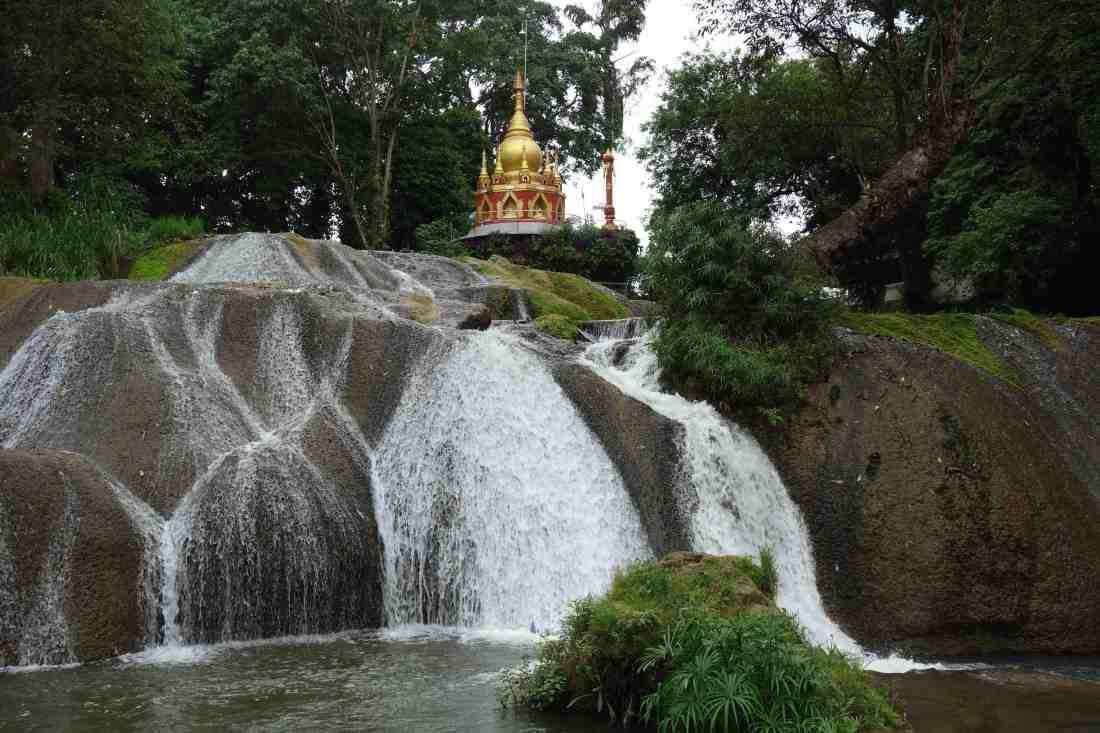
[Above photo: Waterfall at a shrine outside Pyn Oo Lwin]

I’ve returned from a 5 day trip to northern Shan State. Yesterday, Tuesday, was the Full Moon of Waso  and Friday is Martyr’s Day so I cancelled classes for this week. We’ll have clinic on Wednesday and Thursday, as I don’t want to interfere with the momentum of referrals and follow-ups, and those psychiatrists who are local can come in to run it. The idea of a 1-3 week holiday during the year for government workers, including physicians, is unheard of.

Before I left Yangon I wanted to pay Jose for the carpets I bought—small, stunning Afghanis—but when I arrived at his home, my wallet was missing. That gave me pause, since it meant that for the time being I couldn’t withdraw money from ATM’s or charge anything. I walked it back and my best guess was that the wallet fell out into the mud as I paid a taxi driver and rushed to get my umbrella up in a downpour; I was visiting a Dutch psychologist who has been involved with child protection here for years. The other possibility was that I somehow left it at the library. Since I wear a longyi, I have no pockets and am not yet confident enough to stick it in my waistband like the younger crowd. So I keep it in a zippered pocket in my backpack with my phone and surplus cash. Stupidly, I had both of my ATM cards in it. I have friends to borrow from in the short term, I can get dollars to convert to kyat from the Embassy, and can have new cards sent by Linda via DHL within a couple of weeks, all a nuisance for me and others.  Still, it was unnerving, just as I was setting out on a trip.

The next day as we pulled up to the UniMed 1 cafeteria, Dr. Gyi’s phone went off. I’d left my wallet on a bench in the lobby of the library and a student turned it in. All intact, even the $100 bill I keep for emergencies (like this one!). When I returned home I took everything out of the wallet except my Visa, one ATM, my Maine driver’s license, and the $100 bill. Was my Unconscious expressing some ambivalence about the trip? Was I just impulsively, inattentively rushing? I didn’t feel great anxiety after the initial discovery I’d lost it, but when I retrieved it, I became aware how much I was holding in.

Dr. Thura Lin, one of my students who lives in Mandalay, took me under his wing, picked me up in a taxi, and the driver got us to the bus station after an hour of wild riding on unlit back streets in a downpour to avoid the traffic mess. Thura had a bite and I had a beer in a little dive he uses at Aung Mingalar Bus Terminal, and at 9:15PM we boarded a huge, new, comfortable bus. An aisle wide enough to dance in. Two spacious, comfortable seats on one side of it, one on the other. A polyester throw. Footrests. Snacks and bottled water. We slept for four hours, stopped for a toilet and mohinga break at a large, open bus stop dining room near Nay Pyi Taw, and then slept another 5. A little 3-wheeled motorcycle taxi zipped us to his childhood home, where I had tea and met his 3 sisters, father, and 12yo nephew.

Dr. Thura had planned an outing for us. His uncle drove us to Pyn Oo Lwin, nephew in tow. The town is at 1300 meters and was founded in 1896 by the British for their officers to escape the Mandalay heat. We toured caves, temples, and waterfalls, a pretty standard itinerary in Myanmar, had lunch, and they dropped me at my hotel and returned to Mandalay. My hotel was a kilometer out of town and set in lush gardens. It was very Bernard Maybeck-looking, with lots of dark wood, open beams, etc.

I went for a walk on a path beside a nearby lake and a jogger started a conversation with me. He is a 51yo retired school teacher who lives off the interest of his savings, drives a $100,000 Mercedes, and was involved for 4 years in something shady which he said he finally couldn’t stomach. Despite the alarm bells, he was an interesting guy and we had supper together while he told me tales of his travels. He’s been to Italy several times, and Oktoberfest 3x. More to the point, he has trekked and climbed a lot in Myanmar and gave me a list of great-sounding possibilities here.

The next day I walked to, and through, the National Botanical Gardens for 5 hours. It was magnificent and well-maintained by the Burmese since the British left. Wonderful formal flower beds, massive timber bamboo and teak groves, two enclosures with Takin in them, and so forth, all around a long lake. Takin are an Eastern Himalayan ungulate found in Bhutan, China, and Northern Myanmar. They look like a small bison crossed with a wildebeest.  The aviary, a net-covered acre of trees, had interesting birds, but seemed miserably confining. The butterfly and beetle museum was astounding to me, especially as I am finishing Half Earth by EO Wilson about the current massive extinction of species worldwide.

I walked a few miles to the main market, having only one dicey encounter with a pack of 5 angry dogs. A woman came out of a nearby house and they, recognizing her, slunk away. By now it was drizzling but I had my trusty umbrella. Pyn Oo Lwin is known for its sweaters; I’m not sure why as they are machine-made but I got a great thin wool one for $3 and a heavier woolen turtleneck for $5. Hard to resist, no bargaining. I secured my seat on the train for the next day and taxied back to the hotel for the evening.

My cab arrived on schedule at 7:15AM the following day and took me to the train station. This train line was built by the British, opening in 1903. It contains the Gowteik Viaduct, which was the second highest bridge in the world when it was constructed and remains the longest in Myanmar. The train cars are likewise of ancient vintage. As the journey to Hsi Paw started, the track was so uneven that the train rocked back and forth violently, tossing luggage into the aisles. The viaduct is a marvel and we crossed it at walking pace. Trains are, for me, the most interesting form of travel, although sailing is a close second.

There was chatting among the passengers, both Myanmar and foreigners, and I saw a couple I’d supped with a month or so ago, travelling the same route. The bushes beside the track scraped the side of the train and whapped leaves off into the permanently opened windows.  It was green beyond imagination. I felt like I was bathing in chlorophyll and realized how much I’ve missed it being in Yangon.

I didn’t take the time to explore Hsi Paw, another British hill town and site of a Shan prince’s “palace”, a large, colonial-style house. The town is set in a valley ringed with mountains and surrounded by rice paddies. I was whisked in the back of a truck to Mr. Charles’ Riverside Lodge, 2 ½ miles out of town. Mr. Charles, himself, was there to greet me, a genial and clever hotelier. Now in his 70’s, he lets his daughters run the place and they have extremely high standards for staff, food, cleanliness, etc. My cottage had a deck 30 feet above the river amid banana trees and other lushness. I didn’t want to leave, sitting at the pretty teak-slab table on the deck, reading. However, I decided to take a trek the next day and arranged for a guide. More later, in Part 2.

I think the surprisingly progressive agenda of “The Squad” is frightening to many, although it all seems way overdue to me. The bickering among the Dems doesn’t worry me as we’ll have only one nominee at the end and everyone, hopefully, will get behind her. I think it is not surprising to have such struggles, given how ambitious and necessary the agendas are.  A demagogue is extremely dangerous, however, so we cannot screw this up.

Night Baseball

7 July 2019

[Above photo: A massive storm cloud approaching over Yangon, exploding in rain 10 minutes after the picture was taken.]

I reached out to someone I met at the Peace Corps swearing-in ceremony I attended a few months ago and, lo and behold, I finally have a social network. He, Jose, and his wife, Irene, are directors of two different NGO’s, and their neighbor, Kelly, who is within 15 years of my age, is also a PC alumnus and the director of a large NGO.  They have all spent their lives in and out of conflict zones in Benin, Bangladesh, Sri Lanka, and Myanmar, doing this work for 20-30 years, and they know how to have fun. We had a poker game last night with three others, including a Pakistani carpet merchant who is a long-term friend of theirs, and laughed ourselves silly. The title of this post is a 7 card game, 9’s and 3’s wild and if you have a 4 you can draw an extra card. It generates a massive pot so, even if stupid in the world of serious poker, it is very exciting. We ended, happily exhausted and with money redistributed to the two who actually played throughout with strategy, with a single round of “Indian Poker”.  Everyone puts a card on their forehead so you can see the others’ but not your own and you bet for the high card. Not much thinking there.

My history of playing poker is a dismal story. I lost $5 in a game in my freshman dorm in college at a time I didn’t have $5 to lose. The evening was enlivened by a visit from two young Cambridge locals. One of our number had maliciously tossed a couple of milk cartons full of water from the 3rd floor suite onto the sidewalk close to where the two were standing. Up they came, one with a blackjack and the other with brass knuckles. It was their mistake, as two of our number were, as freshmen, stars on the varsity hockey team and were very happy to mix it up. No blows were landed but one of the visitors was suspended off the floor against the wall for a few minutes while he cooled down.  I watched, breathless.

4 or 5 years ago I was invited to a poker game in Petaluma, California (45′ north of Berkeley) where I was consulting briefly for Seneca Center. Their psychiatrist, who they all adored, had dropped dead while taking a stroll. The leadership and staff were in grief so it was difficult for me to break it to them that just because he felt that Celexa (an antidepressant) was “very helpful for these kids”, it didn’t justify him putting them all on it.  Plus, he gave mood stabilizers in the absence of Bipolar Disorder. Clearly a failure of his imagination and understanding of attachment behaviors.

Anyway, I drove north to the evening game and realized that it had been ongoing for many years. All the participants were seasoned players, even the woman who dropped in briefly for one hand in which she cleaned me out while one of the other fellows asked me impatiently,  “What are you doing?”.  I realized that they were helpfully refilling my wine glass at regular intervals and no one else was even sipping theirs. I dropped $90 and learned three good lessons. If you want to lose at poker, drink. If you want to lessen the pain of losing at poker, drink. Finally, if you don’t know who the patsy is, it’s you.

Last night after a few impulsive moves at the beginning in which I lost half my stake, I settled down and played with some strategy and discipline, gaining back most of my losses. Less than the price of a movie at Reel Pizza in Bar Harbor for 5 hours of hilarity. My luck was pretty awful, in addition to my play, but both improved a bit as the evening advanced. The blatantly manipulative trash talk kept us howling. “Man up! You can do it. He’s bluffing again.  See him and raise him.”

One of them directs an organization that works with refugee children, so he invited me to accompany him to look at kids in several camps in two major conflict zones, in Rakhine and Kachin states. I can’t go on the proximate trip in 3 weeks because of my teaching but I can go at the end of my stay. I’ll think about how to gather information on post-trauma symptoms in the children and their parents and ways to address them.

It is slowly dawning on me that we may not get therapy rooms—ie rooms with doors— in which my group of students can learn. I’ll keep trying, but there seems to be major resistance to securing them among the powers that be. The students have learned how to do a proper assessment on everyone and what a good management plan would look like, as well as the difference between bad and good medication practice. I am teaching them, currently, a time-limited therapy called “Interpersonal Therapy” which is evidence-based, manualized, and used world-wide as one of the WHO mhGAP treatments.  They also are learning Play Therapy, principles of behavior management, and the theory and technique of Psychodynamic Psychotherapy, as well as elements of CBT. Psychodynamic psychotherapy is my drug of choice but it is also the most difficult for them to learn and to do well.  After we read some papers, I’ll do a presentation or two, and we do role plays, there is often the question, “Professor, but what is the therapy?” I remind them that this is not removal of an appendix or writing a prescription, that listening, understanding, and deepening the patient’s understanding of themselves in a special kind of conversation or helping them to alter their responses is the therapy. I do love the way they begin a case presentation or lead the discussion of a paper: “Professor and my colleagues…….”.   They are respectful but unruly, a combination appealing to me . I may change my first name; I’ve gotten used to “Professor”. It has a gravitas that “George” lacks, since the latter recalls 41 and 43 and Mad King George.  There is Curious George, however.

We read and discuss theory, do role plays, and occasionally have the opportunity to work with a patient several times in our one room with a door that closes (I suppose we could use one or both of the bathrooms, but that would present interesting transference and play therapy issues.).  We may have to settle for no supervised ongoing psychotherapy experience for them for the present time.  I won’t participate in developing the curriculum for the year-long course in Child and Adolescent Psychiatry they plan to start in January unless I am promised that there will be reasonable psychotherapy facilities. Since psychotherapy isn’t currently done in psychiatric training or practice here and since resources, both money and space, are very limited, I can understand the minimal motivation to secure the same. But Child and Adolescent Psychiatry is largely a matter of intimate talk and play with adults and kids, not the writing of prescriptions, so confidentiality is crucial. If they want a decent program here, they must create the spaces for it.  You don’t do surgery in a large open room with people walking through.

When I head down Anawrahta Street on my way to the bus each morning, every week or two there is a sudden collective look of fear and a scramble of the fish, meat, fruit, and vegetable vendors.  At first I thought I was not noticing an imminent deluge but later realized that the arrival of the police has triggered the activity.  I imagine that vendors are not supposed to block the roads or the sidewalks with their stands and wares. But they all do, making roads impassable on 17th and 18th streets and the sidewalk nearly so on Anawrahta.  When the police arrive, they all scuttle about, dragging their stalls, mats, umbrellas, carts, etc. full of whatever back to the sidelines. The police cruise slowly, menacingly by in their little Suzuki truck, and the whole game resumes.  I am tempted to do in-depth interviews with a vendor and write their life story. I imagine it would be full of poverty, oppression, deprivation, loss, abuse, death, and sadness, but perhaps also joy and love and laughter, although likely not in equal measure. It would be a very interesting but voyeuristic experience.  Perhaps if I were a more talented writer it could be a part of something that would help to change their lot.  So many fascinating directions in which to travel through this life; the difficulty is choosing which star to follow.

Before July 4th, I’ll admit I had fantasies that a soldier in one of the two stationary Abram tanks, trucked to the Mall in order to bolster his fragile bone-spurred draft-dodging image, would throw caution to the wind and sacrifice himself and the Lincoln Memorial for the greater good. The Blue Angels might have assisted. But the crowds were too great a liability to support even my fantasy.  I want to help them see the light, not plunge into infinite darkness.